AI-Assisted Short Film / 2026
03:00
SHEEP
《羊》
Final cut
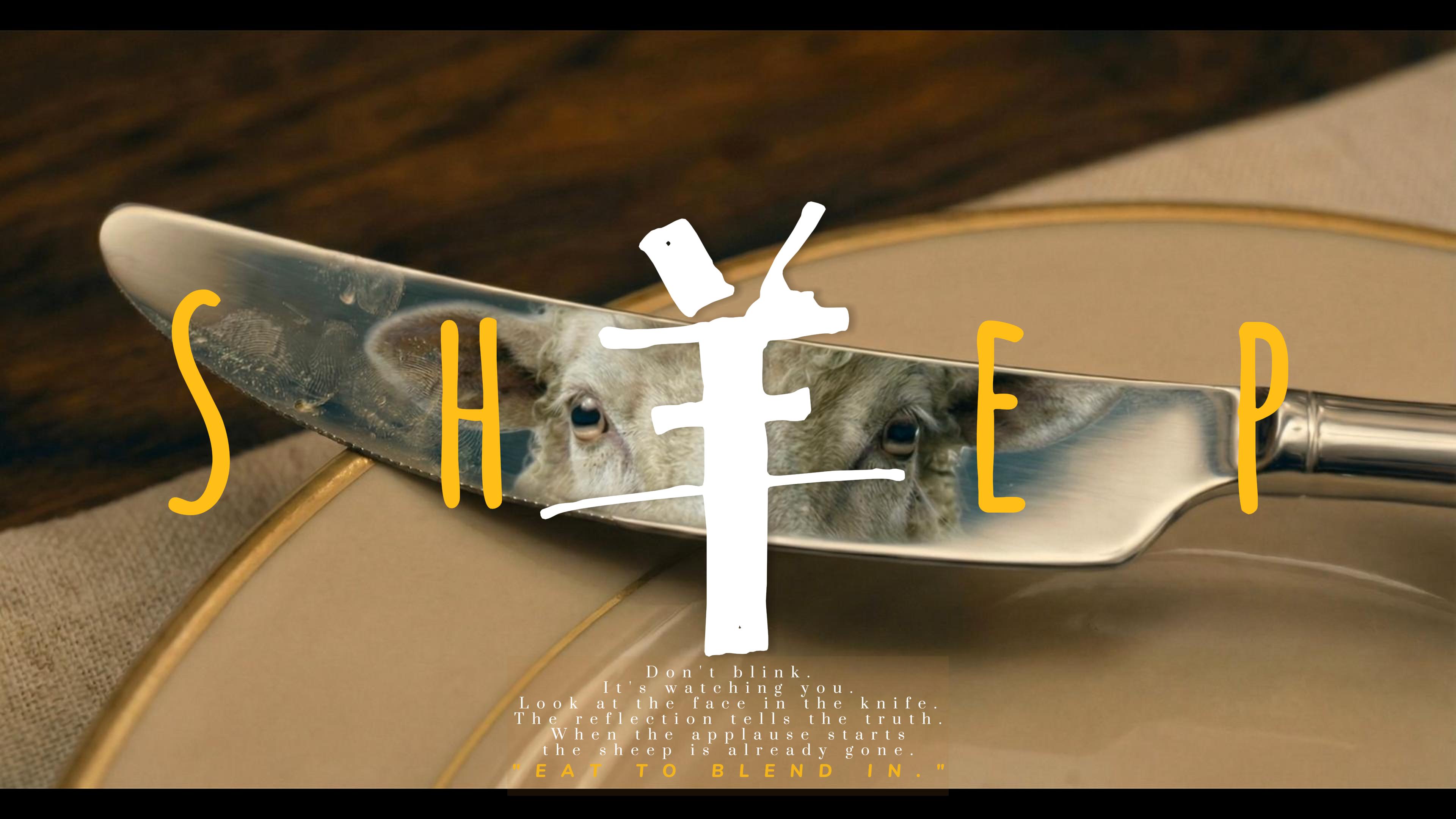 FINAL OUTPUT / HERO FRAME
Project thesis / 01
CONCEPT BEFORE TOOLExploring the ideological discipline and implicit violence of modern civilization, revealing the inevitable loss of subjectivity, class submission, and self-alienation behind the act of collective conformity.
Synopsis / 02
A psychological satire on embodied identity, institutional authority and the cost of belonging.
Professor Chen suffers from severe cognitive dissonance, genuinely believing he is a sheep, yet survives by suppressing his instincts and passing as human within a rigid institution. During a lecture, panic turns a student’s helping hand into a wolf-like threat in his subjective vision, nearly exposing him. Chen reframes the breakdown as a teaching exercise, but the students remain uncertain until the Dean applauds from above and the room follows as a flock. At a dinner with the Dean, the waiter serves lamb. To preserve his status and remain accepted by the collective, Chen must violate his embodied identity and consume his own kind.
Narrative architecture / 03
Vigilance becomes exposure; exposure is repaired through authority; authority ends in compliance.
Dislocation and Social Camouflage
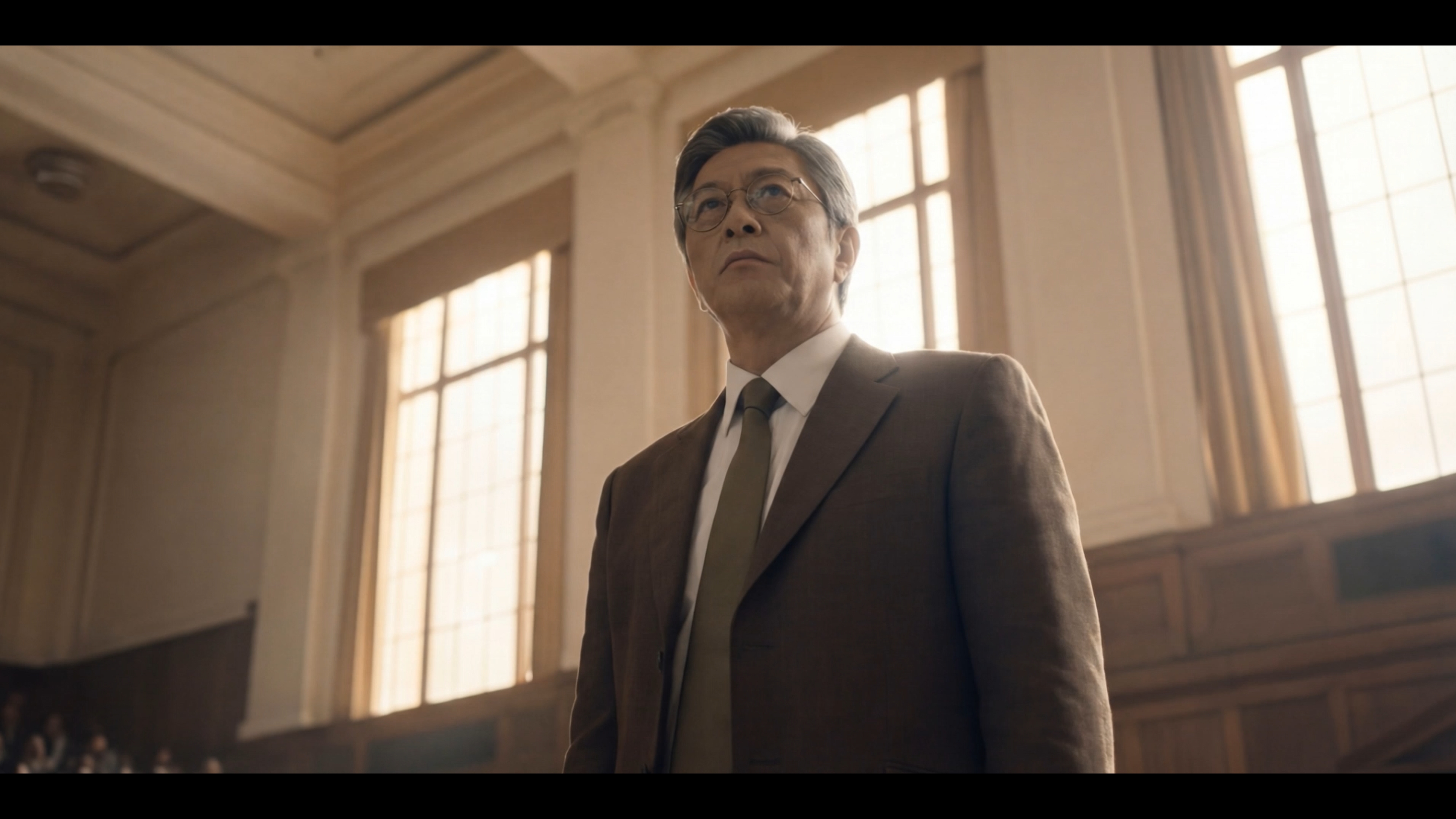
The protagonist experiences a complete conflict between bodily perception and social appearance: he feels himself to be a sheep, while everyone else continues to recognize him as human. This establishes the film’s central rule—social perception determines visible reality. His arc begins in a state of vigilance, suppressing instinct in order to preserve his place within the human world.
The Breakdown of Control
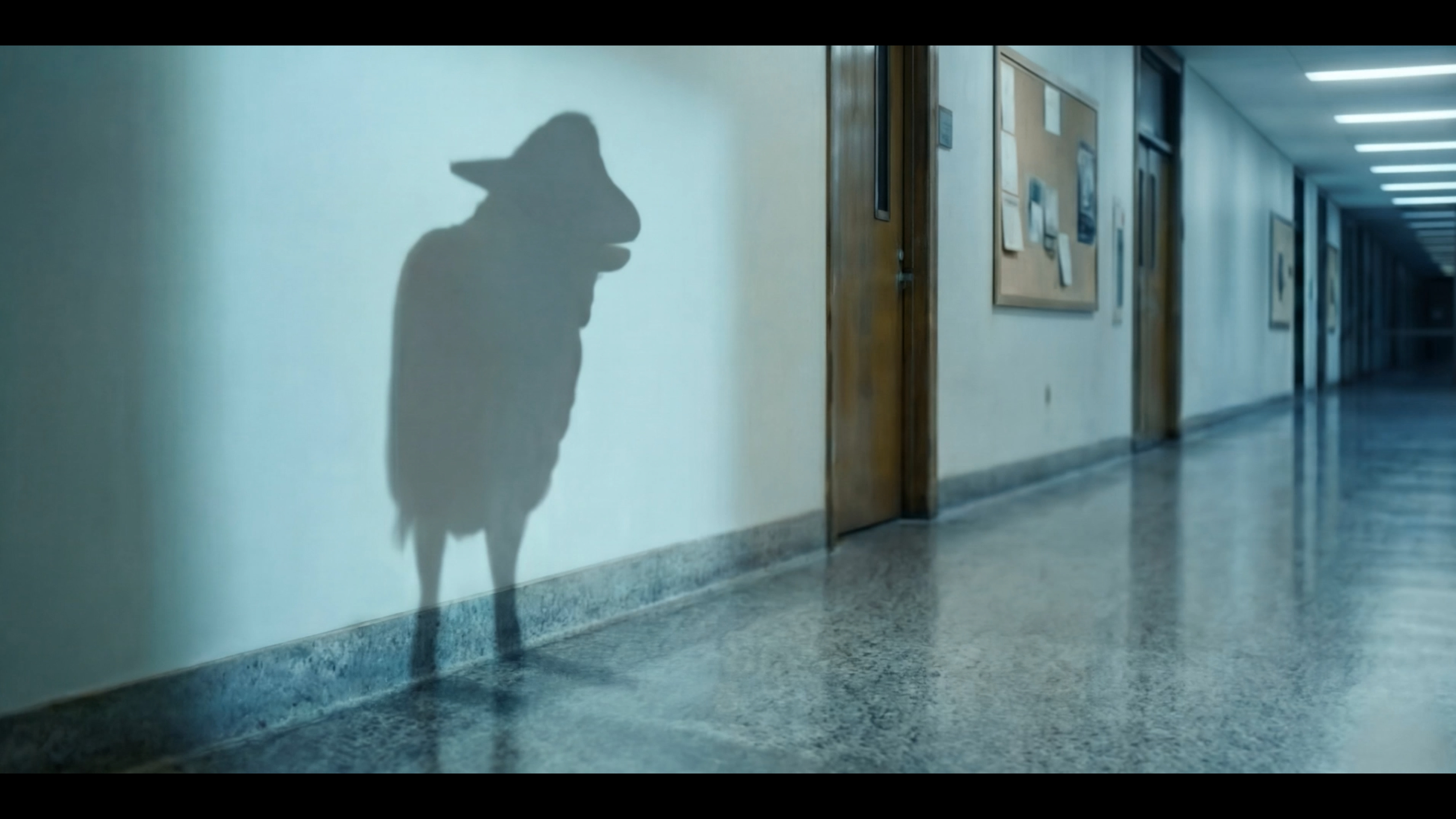
At the lectern, public attention turns camouflage into exposure. As a student reaches out to help, Chen misreads her shadow as a wolf-like claw, revealing how fear has recoded social contact as predation. His carefully maintained disguise collapses, and private dissonance becomes physical and audible.
Institutional Repair and Collective Conformity
Chen uses academic authority to redefine the breakdown as a deliberate teaching exercise. The students initially hesitate, unsure how to interpret what they witnessed. Only after the Dean applauds from the upper gallery do they follow collectively, allowing a signal from authority to convert doubt into approval without reflection. The dismissal of another lecturer suggests the consequences awaiting anyone who can no longer maintain an acceptable appearance.
Compliance and Symbolic Self-Betrayal
The dinner with the Dean becomes the final test of conformity. Faced with lamb, the protagonist must either remain loyal to his embodied identity or violate his instincts to preserve institutional acceptance. By choosing to eat, he completes his transformation—not physically, but socially and ethically—through an act of symbolic self-consumption.
Selected frames / 04
Every image must carry evidence.
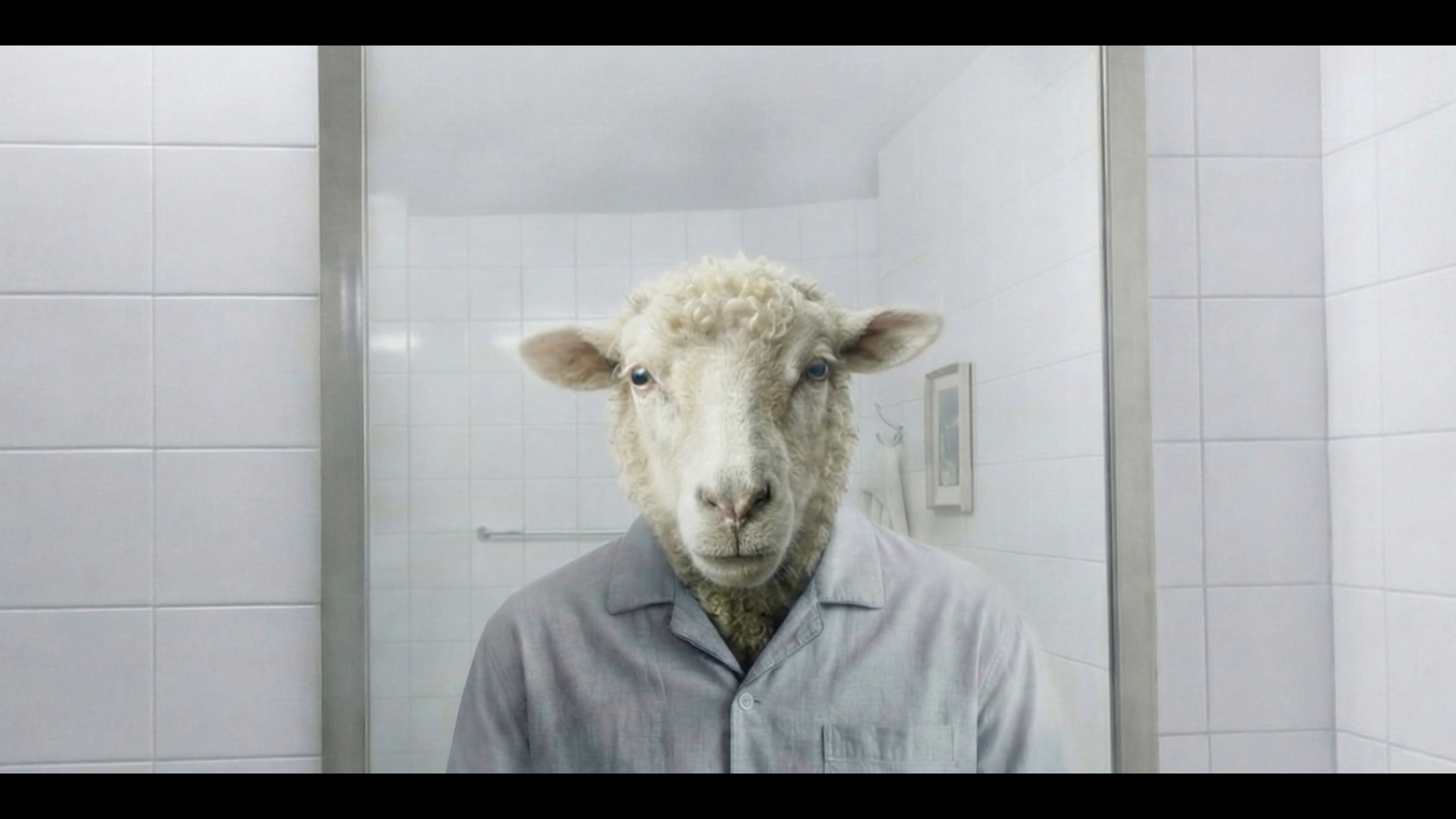
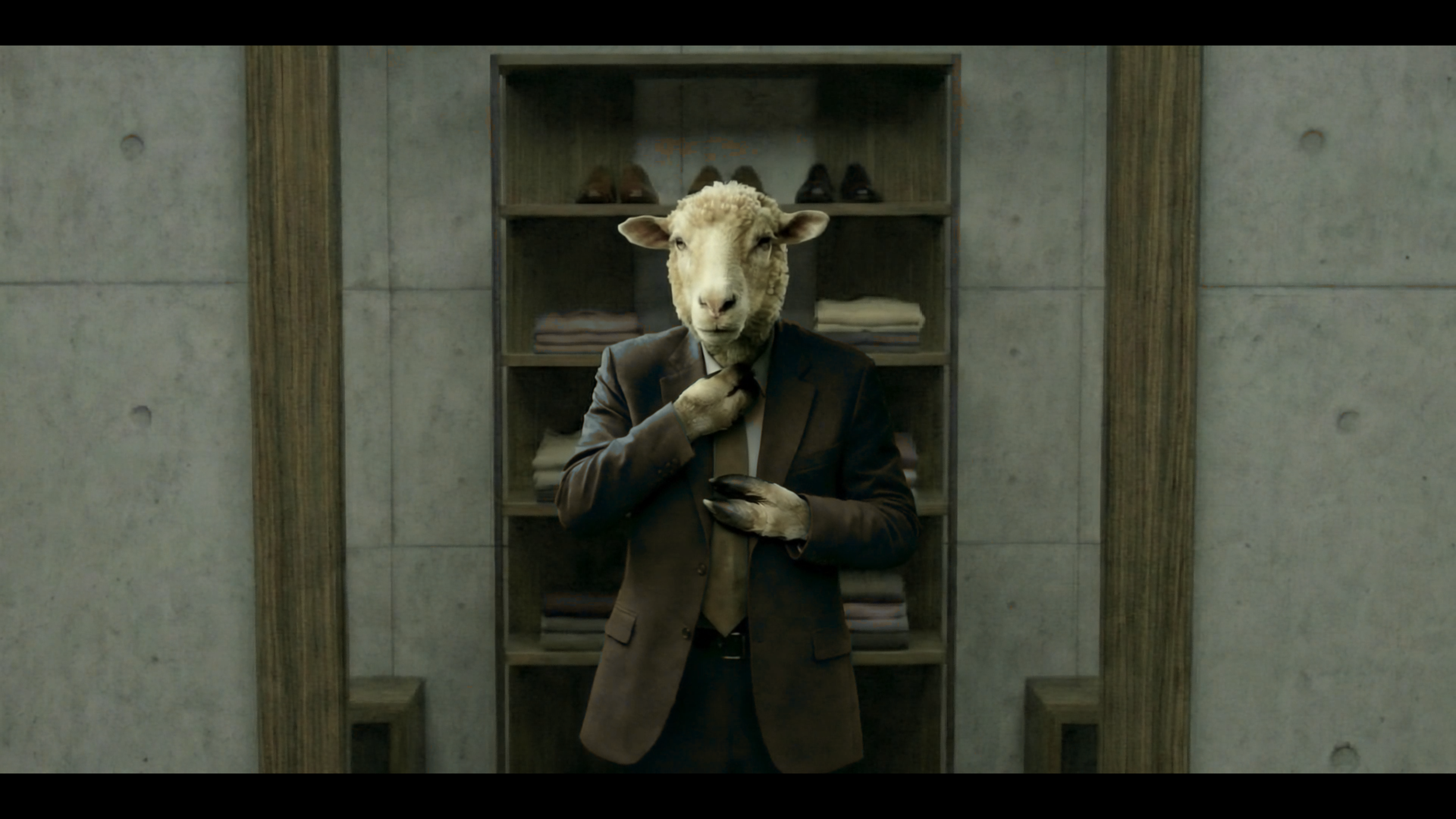
Dislocation and Social Camouflage
Establishing the visual paradox of the protagonist's cognitive dissonance, contrasting hidden animal instincts with strict societal norms.
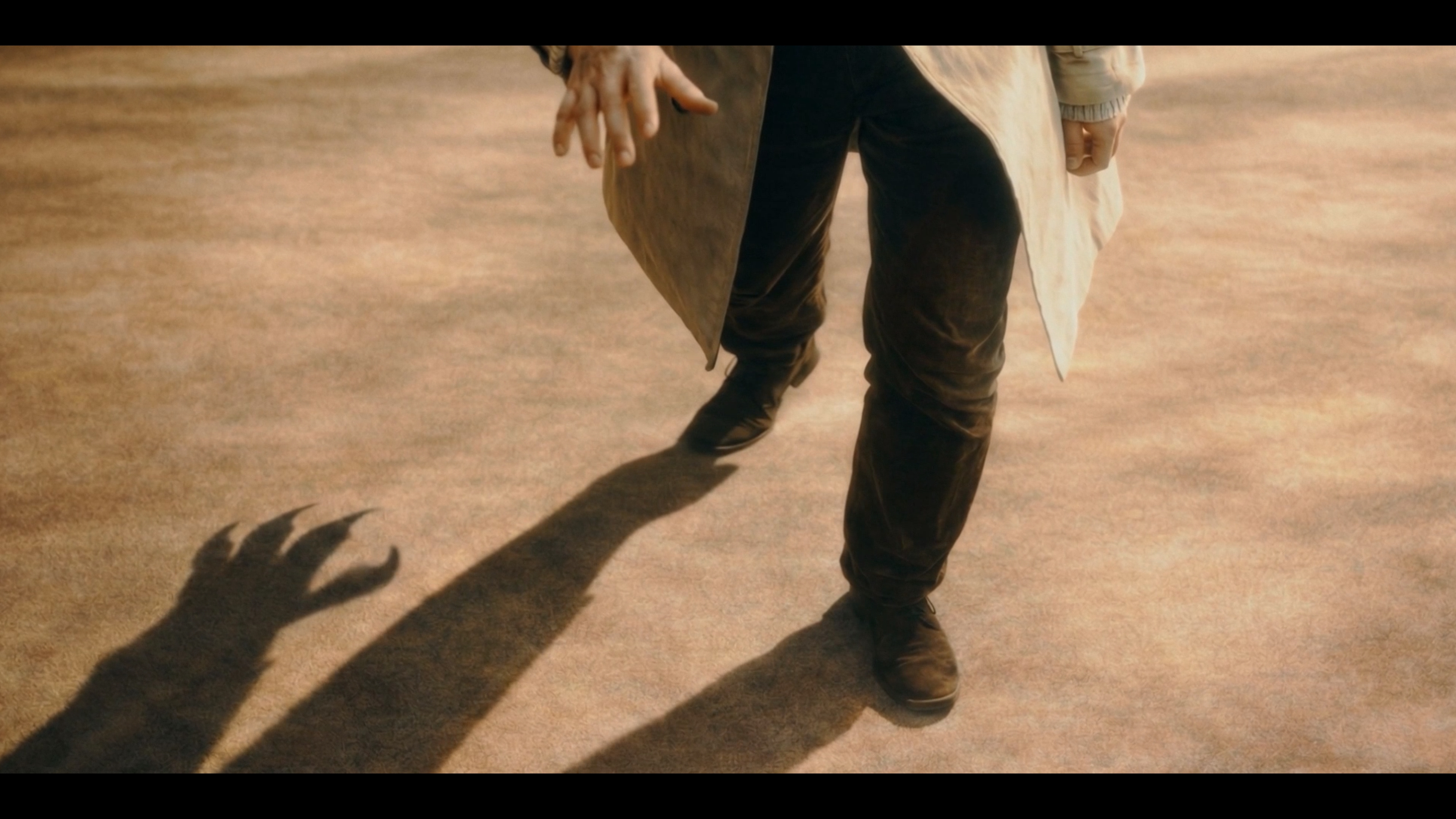
The Breakdown of Control
Public scrutiny turns internal fear into visible rupture. A student’s helping hand is misread as a wolf-like threat, and Chen’s controlled human performance collapses.
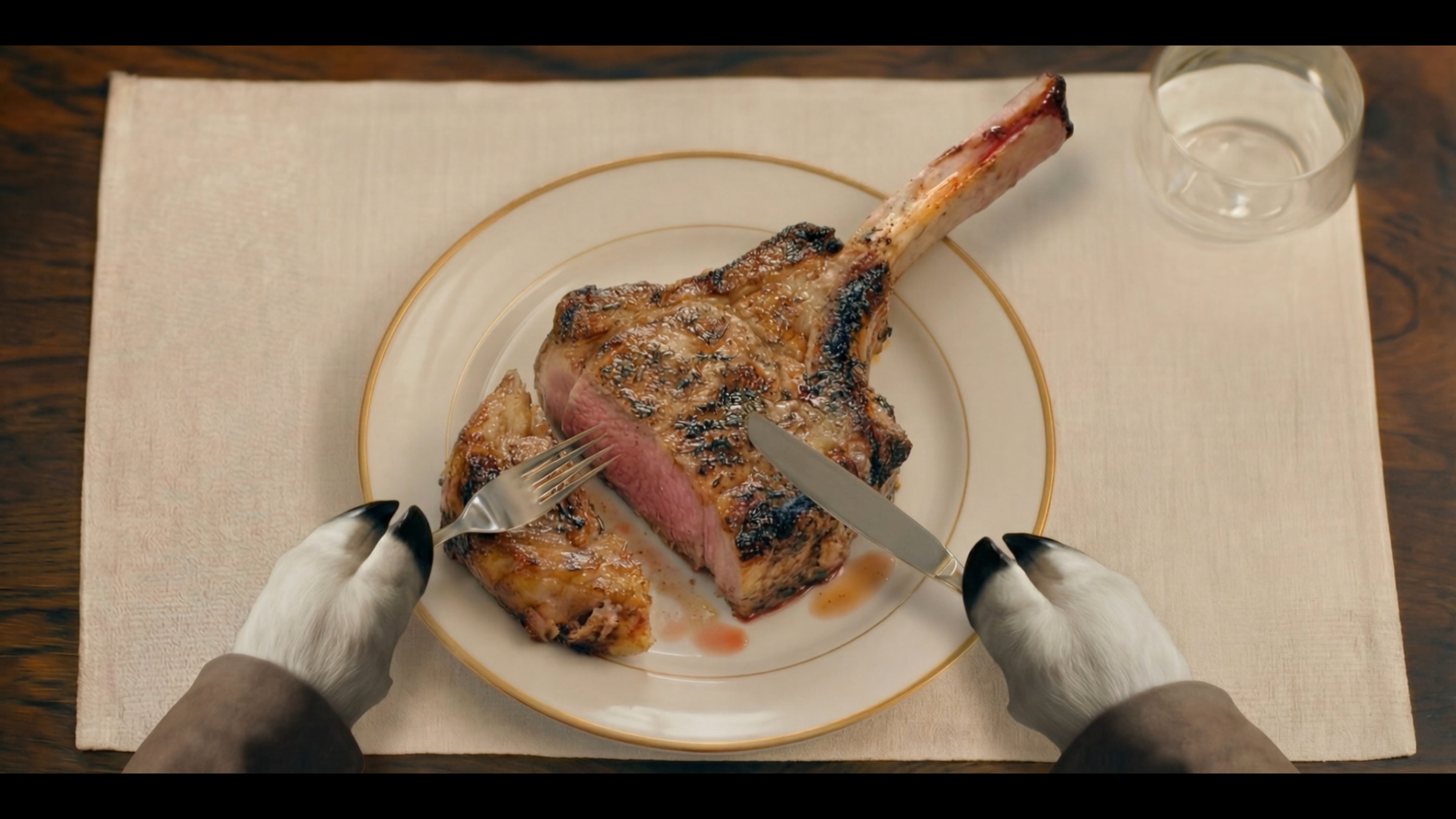
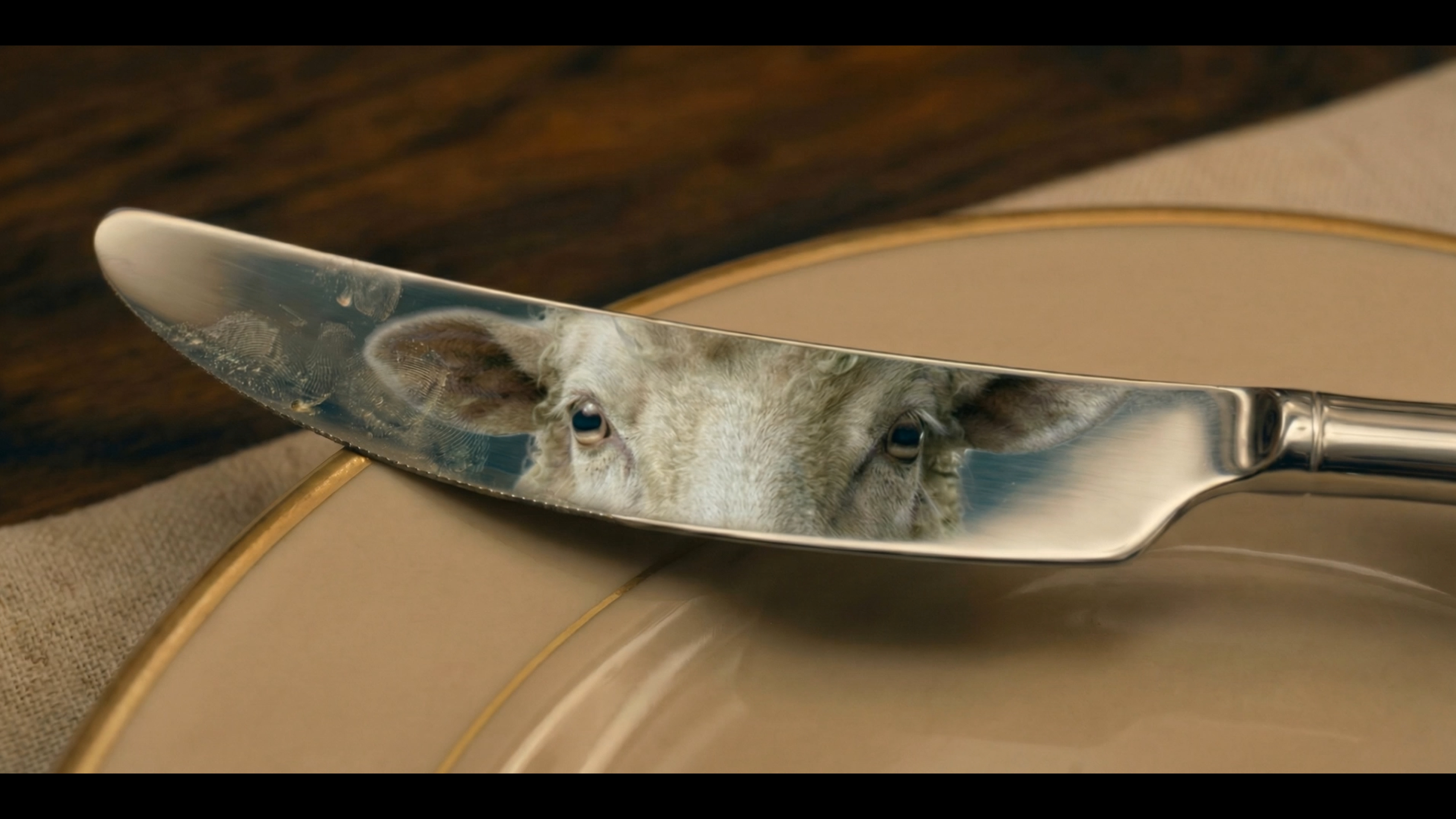
Power Discipline and Symbolic Self-Betrayal
Visualizing the implicit threats of the hierarchy and the ultimate, grotesque sacrifice required to secure social survival.
Visual system / 05
Perceptual separation, institutional geometry and controlled colour temperature
Embodied Dissonance
Private spaces reveal the protagonist’s animal identity through reflection, bodily sensation, shadow and instinctive movement, while public spaces preserve his recognisably human appearance. Under panic, even a student’s helping hand becomes a wolf-like claw in his perception. Transformation therefore remains psychological: the body stays socially human while fear recodes the world around him as flock or predator.
Institutional Space as Behavioural Control
Elevators, corridors, lecture halls and dining rooms are organised through symmetry, repetition and strong axial perspective. In the lecture hall, the Dean’s elevated position allows a single gesture to direct the crowd below. Architecture therefore becomes a mechanism of observation, hierarchy and behavioural discipline.
Temperature as a Hierarchy of Belonging
Cold blue and metallic tones dominate transitional and public spaces, suppressing individuality and emotional warmth. Amber light, dark wood and saturated food tones appear only within spaces of institutional privilege. Warmth therefore signals acceptance, but also marks the moment when belonging requires ethical compromise.
Human–AI workflow / 06
AI generated visual fragments; direction determined what could be seen, heard and believed.
Designing Transformation as Split Perception
Rather than showing continuous transformation, I used AI to create isolated subjective ruptures: the sheep-headed bathroom image, the animal forelimb, the helping hand misread as a wolf-like claw, and the sheep reflected in the dinner knife. Public scenes preserve the professor’s human appearance, keeping his transformation psychological and socially invisible.
Constructing Performance from Generated Fragments
The lecture-hall breakdown was assembled from separate actions: Chen’s animal gestures, the wolf-claw shadow, his internal sound, the students’ hesitation, the Dean’s initiating applause and the room’s collective response. AI produced individual fragments; performance and herd behaviour emerged through my control of shot order, duration and sound timing.
Concentrating the Moral Choice into Objects
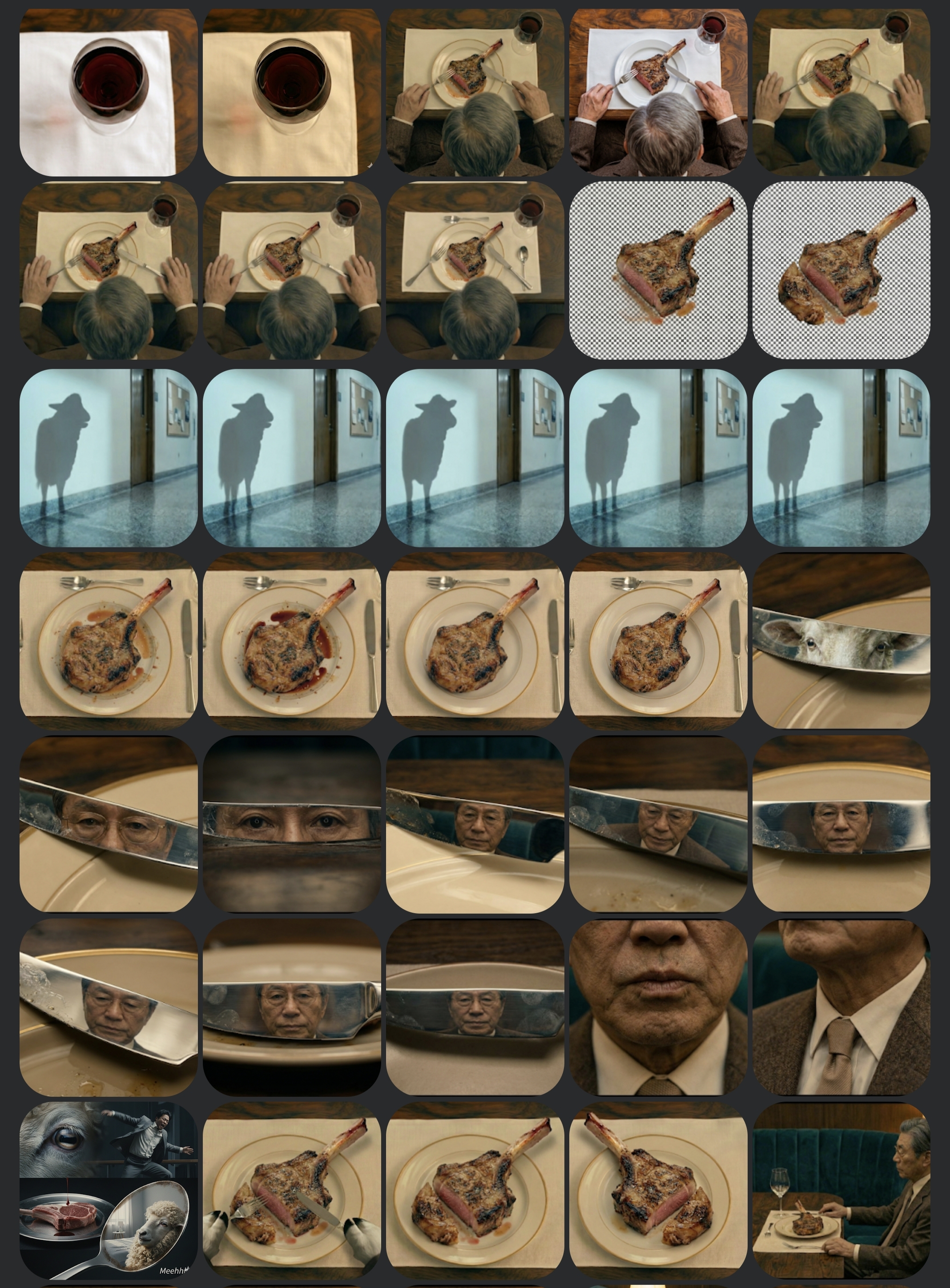
In the final dinner sequence, I reduced the visual field to a controlled set of details: the lamb chop, the professor’s mouth, the knife reflection, the wine and the overhead eating shot. These generated inserts were selected and arranged so that an ordinary meal becomes a test of conformity and symbolic self-consumption.
Engineering proof / 07
Show the decisions behind the final frame.
Character Continuity System
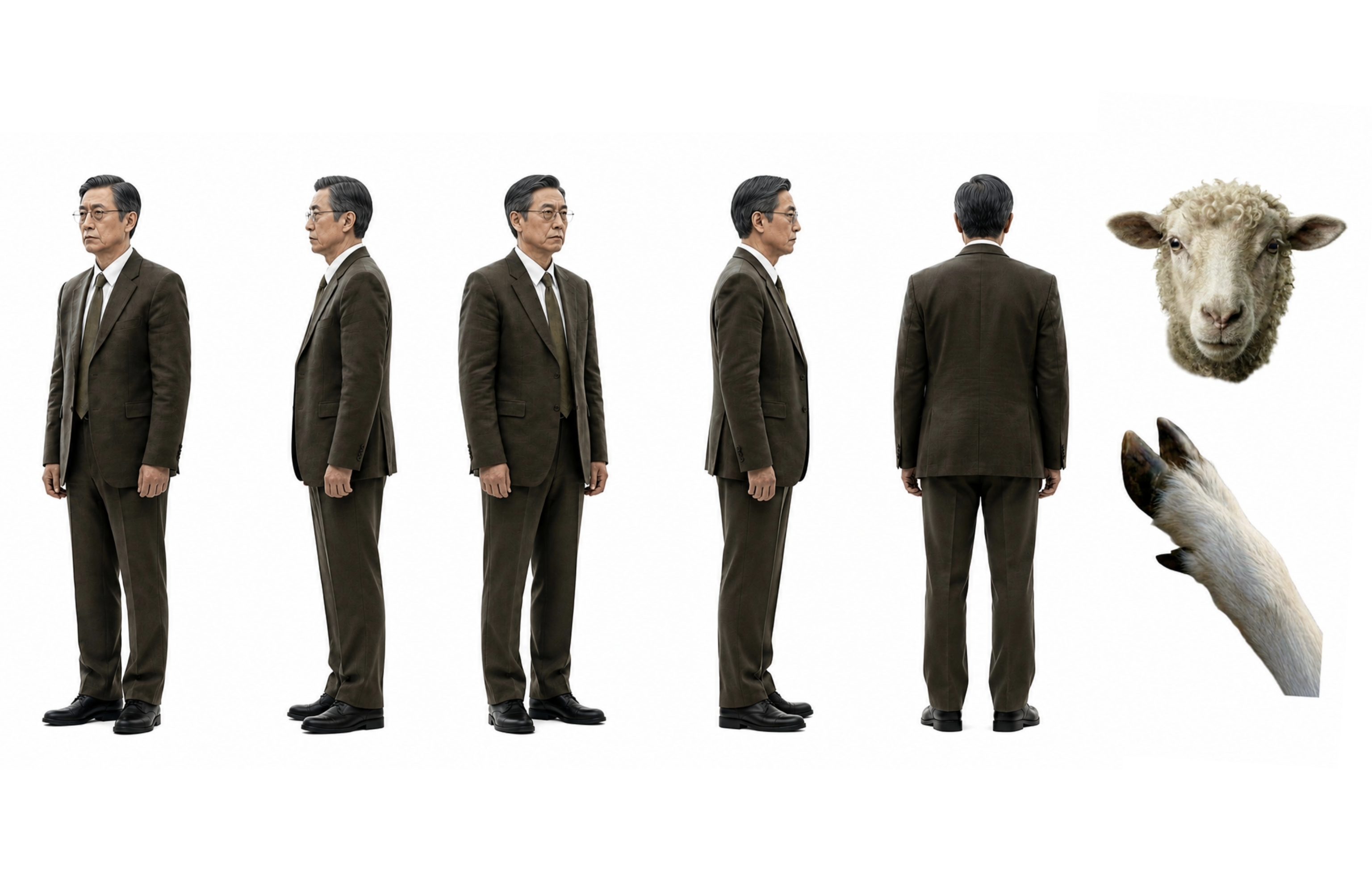
A multi-angle reference system established the professor’s fixed identifiers, including grey hair, glasses, his sheep's face and hooves from subjective camera, facial proportions, brown suit and restrained posture. These features were carried across separate image and video generations, while back views, hand details and wide shots were used strategically when facial continuity became less reliable.

Editorial and Sound Design
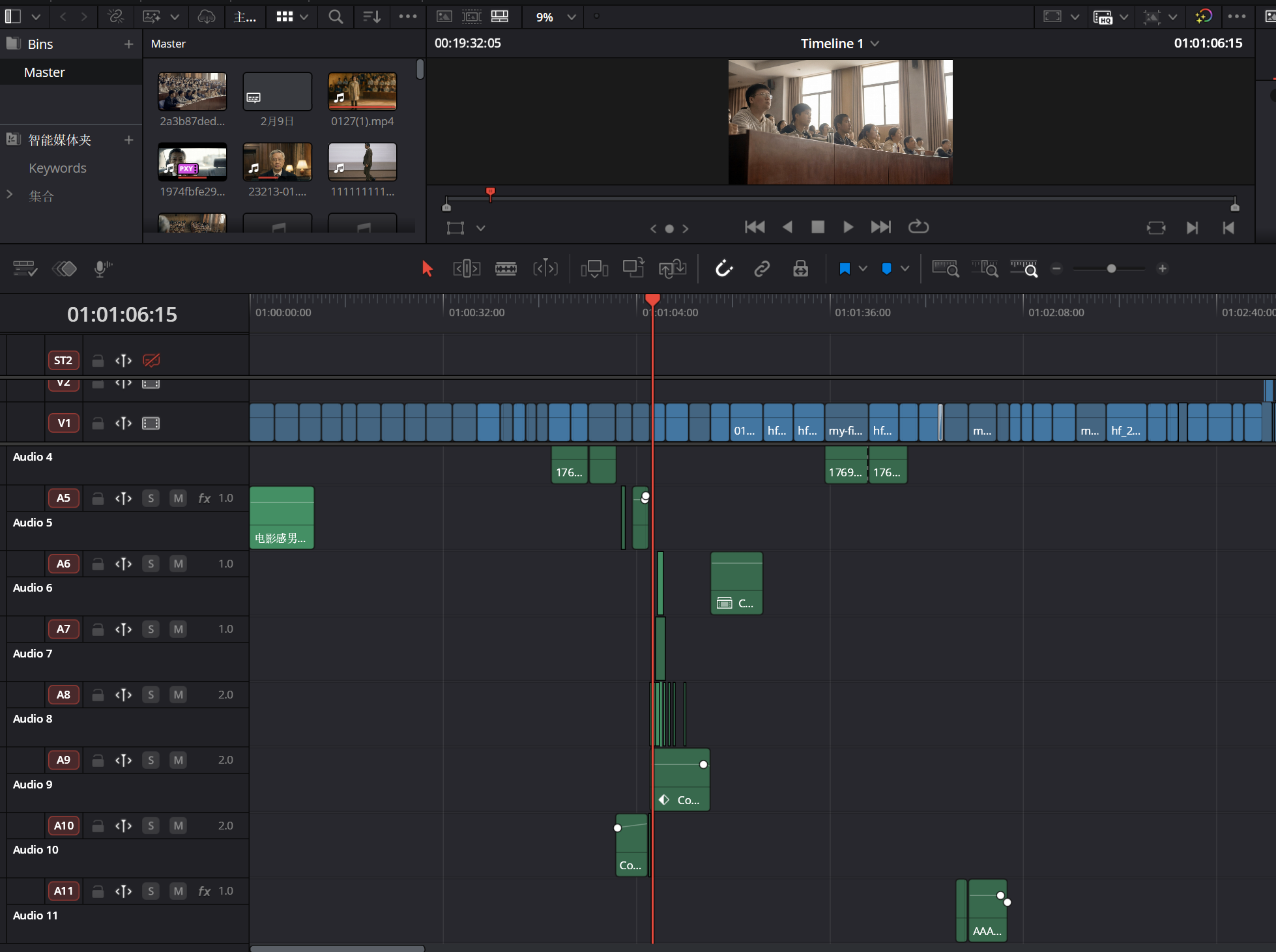
This DaVinci Resolve timeline capture records how independently generated shots and layered sound elements were assembled into the final cut of SHEEP. Dense audio editing supports the lecture-hall breakdown, while controlled pauses shape the tension of the final dinner sequence. As the protagonist senses that his concealed identity is about to be exposed at the lectern, Valhalla VintageVerb and delay processing were applied to selected sound effects and his internal voice, separating subjective perception from the physical space of the classroom and intensifying the pressure of imminent discovery.
Iteration and Selection Judgement
Multiple variants were compared according to character stability, light direction, prop integrity and spatial consistency. The selected frame was not necessarily the most detailed output, but the version that best preserved readable action and continuity with the surrounding shots.
Director's statement / 08
Why this story required this visual system.
I created this story to explore the implicit violence of social conformity: how modern civilisation pressures individuals to cannibalise their own identities in order to remain accepted by the collective. The film is built around an inversion. Chen, who believes he is a sheep, is also the person most conscious of herd behaviour. The students initially doubt what they have witnessed, but when the Dean applauds from above, they follow without reflection. Authority does not persuade them; it tells them how to respond. Chen’s fear creates the opposite distortion: a female student’s helping hand becomes a wolf-like claw, revealing a world he understands through the roles of flock and predator. AI allowed me to visualise these unstable perceptual shifts without turning the film into continuous physical metamorphosis. My key directorial decision was to contrast Chen’s internal animal panic with the cold geometry of institutional space. By controlling composition, lighting, pacing, sound and montage, I treated AI as an image-making system rather than a co-author. The final dinner completes the central irony: to remain accepted as human, Chen must perform the most extreme act of herd conformity by consuming the identity he privately recognises as his own.
Authorship / 09
What I actually directed.
- 01Concept, Screenplay, Direction, Lead AI Production, Primary Editing, Sound Design and Final Mix
- 02Additional AI Generation and Editing on Selected Sequences — Yize Wang
Iteration & reflection / 10
The repair was dramatic, not decorative.
The project taught me that AI-generated realism becomes more convincing when transformation is withheld rather than constantly displayed. The limitations of the earlier-generation models were most visible in facial continuity, hand movement and sustained performance, but these constraints pushed me to direct through framing, recurring objects, sound and montage. In a future iteration, I would lock the character, lighting and spatial references earlier, reduce redundant coverage, and design the lecture and dinner scenes around fewer but more sustained performance beats.
Methods / index